
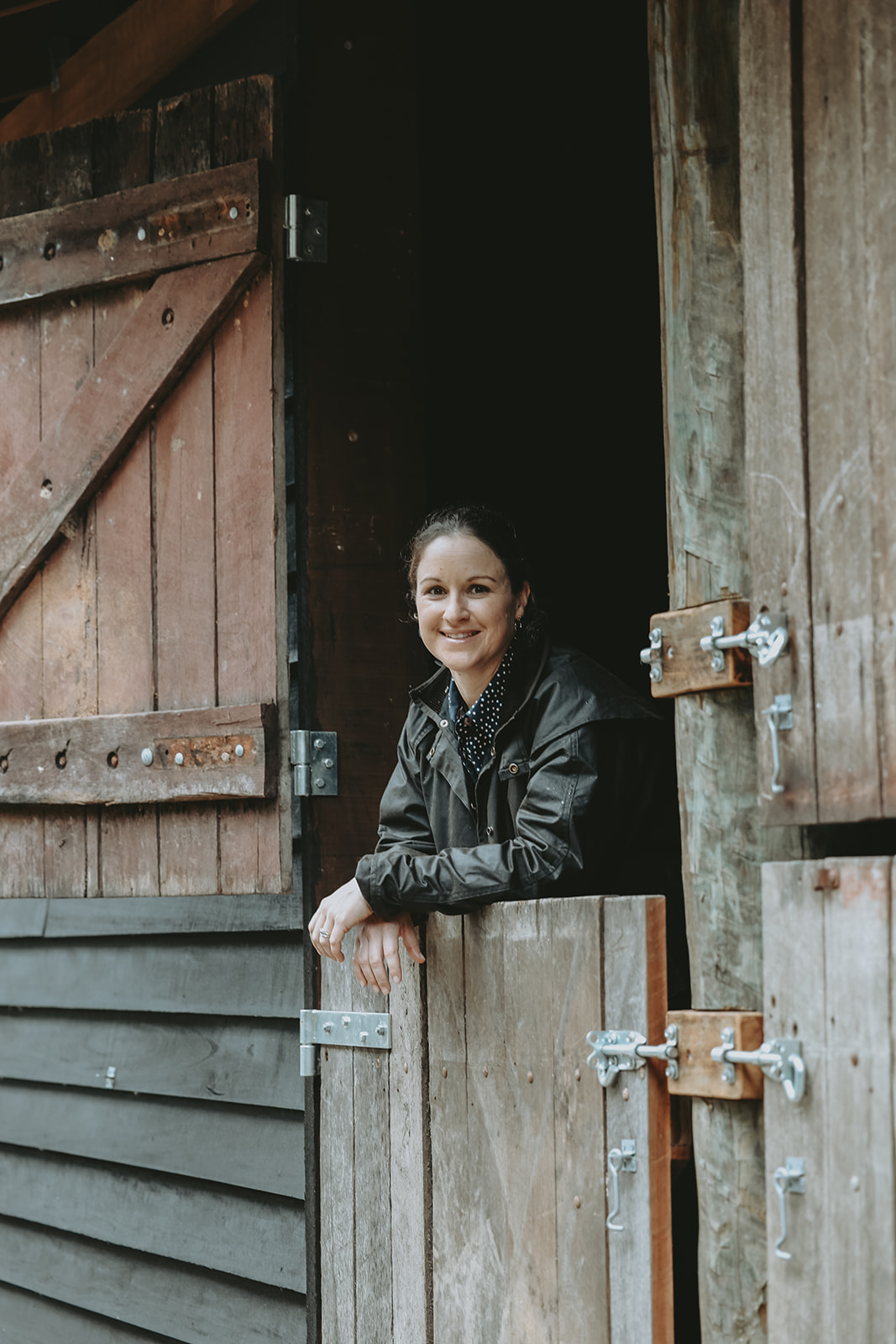
22 Aug How meat judging gave Emma Black a steak in the beef industry
There was never any doubt in Emma Black’s mind that she would pursue a career in agriculture.
“I was born into agriculture – I don’t think I really considered anything else, I just loved it,” she said.
Growing up on a sheep station near Longreach in Western Queensland, Emma was inspired by her parents who were always seeking new and innovative ways of managing their animals and their operation.
But it wasn’t until Emma entered a meat judging competition that her path into the meat industry began to take shape.
While studying a Bachelor of Animal Science at the University of New England in Armidale, Emma participated in the ICMJ National Conference and Competition in Wagga Wagga.
“You go through your degree and gain a lot of knowledge, but you don’t necessarily learn how to apply a lot of that knowledge,” Emma said.
“ICMJ really opened up my eyes to the complexities around processing and how the different sectors of the supply chain really connect together.”
Emma’s experiences and opportunities through the ICMJ program exposed her to a side of the industry she had never seen.
“Growing up on the land you understand that end, but it’s quite difficult to get exposure to the meat processing end of the supply chain and understand things like grading and how what you do on farm influences eating quality.”
“It gave me the opportunity to step beyond the farm gate and see how every decision from genetics right through to processing play a really important role in the end product,” she said.
After judging her way into the top 10, Emma later earned a spot on the Australian ICMJ team to tour the United States in 2009.
“I thought the Australian program had an impact, but going to the US was incredible,” she said.
“We spent a lot of time in feedlots, in processing facilities and with producers, just learning from them.”
After returning to Australia, Emma moved to north Queensland to work as a livestock nutritionist. During that time, she established the first ever James Cook University meat judging team, became their coach and also joined the volunteer ICMJ committee where she later served as coach of the Australian ICMJ team for several years.
In 2015, Emma was awarded the inaugural Zanda McDonald award and six years ago she co-founded Black Box Co, a tool that links data from across the beef supply chain and turns it into insights that producers can use to make decisions on-farm.
“Outside of the technical knowledge that ICMJ gives you, it was really instrumental in building a professional network,” she said.
“A lot of the students that I coached are in incredible roles now, right across the industry and are in CEO and Chair roles, so it’s pretty amazing to see where they’ve gone and still have that strong friendship and connection with them.”
In the first two weeks after the company’s launch, Black Box Co had more than 160,000 head added to the system. That’s now grown to more than 7 million.
“I work directly with the processors, the feedlotters and right back to the breeders and we have a genomics arm in the business now too.”
Now well-established in the beef industry, Emma said Black Box Co is currently exploring opportunities to expand into the lamb supply chain.
“There’s so much data in the meat industry and our role is essentially turning that into something a producer can understand and use,” Emma said.
“If we can enable the producer’s to understand what the grading data means and how they can act on that to improve their supply of better-quality cattle, then that’s our ultimate goal.”